
How to efficiently machine shaped parts on CNC mill-turn machines?
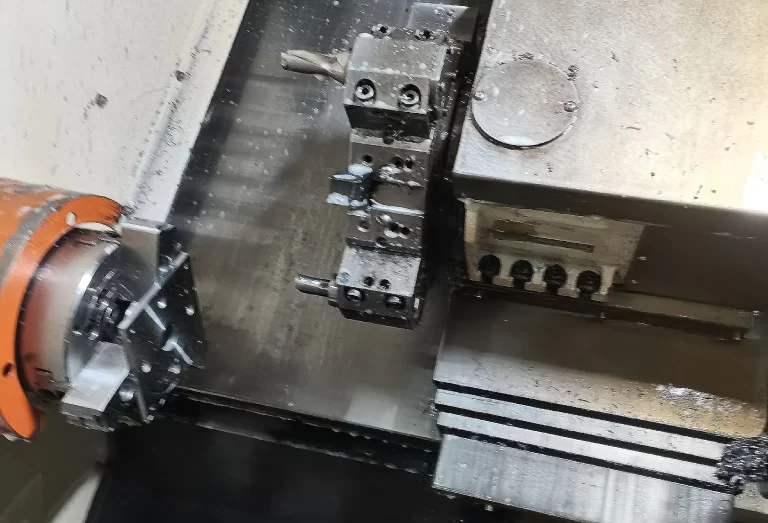

Traditional machining processes rely heavily on large amounts of coolant, which leads to issues such as water waste, soil pollution, and air pollution during the actual machining process.
Guided by the nation’s “Dual Carbon” goals and the new development philosophy, the machining industry urgently needs to undergo transformation and upgrading.
Researchers have developed green cutting technologies as advanced machining processes. These technologies satisfy environmental protection and sustainable development requirements.
They prioritize higher material utilization for resource conservation. Operators can cut down scrap output during machining and turn more raw materials into eligible workpieces.
Such technologies aim to curb pollution from cutting fluids. They also lower exhaust and waste residue discharges for cleaner production.
The development of green cutting processes relies on multidisciplinary theories. Among these, materials science provides critical support;
The research and development of new cutting tool materials—such as high-performance cemented carbides and ceramic cutting tools—is based on materials science principles.
These materials possess excellent thermal stability, wear resistance, and thermal shock resistance, effectively meeting the practical demands of dry or near-dry cutting while reducing tool wear and extending tool life.
Tribology theory helps optimize friction conditions during the cutting process. Scholars conduct thorough investigations on friction mechanisms at the cutting interface.
These studies support the creation of high-efficiency lubrication approaches like minimal-quantity lubrication (MQL).MQL technology sharply cuts cutting fluid consumption. It also decreases machining cutting forces and frictional heat.
Workers gain better surface finish quality with this lubrication method. These findings build a multi-angle theoretical basis for green cutting applications.
In the machining process, when coolant is eliminated in dry cutting, the cutting tool must possess a variety of excellent properties.
Specifically, take Kennametal’s KY1540 ceramic cutting tool as an example. Its primary component is high-purity aluminum oxide (Al₂O₃).
Aluminum oxide delivers high hardness and outstanding heat resistance. Operators can mill 6061 aluminum alloy under dry conditions at 2000 m/min.
This cutting speed rises roughly 33.3 percent. Traditional high-speed steel tools only reach 1500 m/min for the same task.
At the same time, tool life has been extended from 20 hours for traditional tools to 60 hours. Aluminum oxide retains a relatively stable crystal structure at high temperatures.
It blocks softening and deformation triggered by cutting heat. This property keeps the tool’s cutting performance stable during dry machining of aluminum alloys.
Tool wear resistance also plays a vital role in dry cutting. Sandvik Coromant manufactures the Jabro®-Solid2 series of carbide tools.
These tools carry a titanium nitride-aluminum coating and excel in dry turning of Ti-6Al-4V titanium alloys. The aluminum inside this surface coating reacts under high temperatures.
The reaction generates a dense aluminum oxide protective layer. This layer greatly boosts the tool’s oxidation resistance. Test data shows that when using tools with this coating, the wear rate is significantly lower than that of uncoated tools.
Operators adopt identical cutting parameters for this comparison. Uncoated tools suffer severe wear after processing 50 titanium alloy workpieces.
These worn tools lose their processing capacity immediately. T230 series coated tools finish up to 100 workpieces under the same conditions.
Such performance lifts overall machining efficiency markedly. Manufacturers also cut tool expenses with these coated cutters.
Resistance to thermal adhesion and thermal shock are also critical performance indicators for dry-cutting tools. ISCAR has incorporated alloying elements such as tungsten (W) and molybdenum (Mo) into its IC908 tool material.
During dry cutting of the nickel-based alloy Inconel 718, these alloying elements effectively enhance the tool’s high-temperature strength and thermal stability.
W and Mo atoms dissolve into the crystal lattice of the tool material. They greatly reinforce interatomic bonding forces. These alloy atoms restrain plastic deformation and thermal adhesion under high temperatures.
Tools without these alloying elements serve as the reference group. IC908 tools extend their service life by nearly 40% during dry cutting of Inconel 718.
This performance sustains uninterrupted green machining operations. It also guarantees stable overall machining quality.
In machining, cutting heat significantly affects the accuracy and stability of machine tools during dry cutting, making it particularly important to optimize the machine tool structure.
The DMU 65 monoBLOCK horizontal machining center from DMG Mori Seiki features a thermally symmetrical design.
The symmetrical layout of key components—such as the spindle head and bed—allows thermal deformations caused by cutting heat to cancel each other out or be minimized.
Researchers carry out practical tests on high-strength steel dry milling. The setup uses 15 kW cutting power and runs for one hour.
The DMU 65 monoBLOCK horizontal machining center shows only 0.03 mm thermal deformation. Conventional horizontal machining centers reach 0.06 mm thermal deformation under identical conditions.
This low thermal deformation maintains reliable machining accuracy.
Thermal compensation technology can effectively improve the accuracy of dry-cutting machine tools.
Mazak employs the VARIAXIS i-500 five-axis machining center, installing high-precision temperature sensors at critical locations such as the machine tool spindle, leadscrews, and guideways.
During dry cutting operations, these temperature sensors monitor temperature changes in real time and transmit the data to the control system. Engineers build a thermal deformation model in advance. The control system references this preset model.
It computes thermal deformation values automatically. The system adjusts leadscrew compensation values and guideway preload.
These adjustments deliver real-time compensation for thermal errors.
When machining complex mold parts with a required machining accuracy of ±0.05 mm, dimensional errors were ±0.08 mm before the implementation of thermal compensation technology.
After adopting this technology, machining accuracy improved to ±0.04 mm—a one-grade improvement—effectively ensuring the dimensional and geometric accuracy of the machined parts.
In dry-cutting machine tools, a high-efficiency chip removal system is indispensable.
The VF-3 vertical machining center from Haas Automation employs a combined chip removal method using a spiral chip conveyor and a chain-plate chip conveyor.
Operators carry out dry milling on No. 45 steel. The process adopts a 0.5 mm chip thickness and a 500 mm/min feed rate. A spiral chip conveyor carries chips away from the cutting zone first.
It delivers these chips toward the machine tool base. A chain-plate chip conveyor then discharges chips out of the equipment.
This chip removal system delivers outstanding working efficiency. It stops accumulated chips from disturbing machining accuracy.
The system keeps dry cutting processes running smoothly. It also lifts the overall performance of the machine tool.
To innovate in semi-dry cutting technology, a small amount of lubricant can be precisely sprayed through an optimized Minimum Quantity Lubrication (MQL) system to achieve both lubrication and cooling effects.
The key to optimizing this system lies in precisely controlling the lubricant spray parameters.
During drilling operations on 45 steel, an in-house developed intelligent MQL spray device was used to precisely control the lubricant flow rate at 8 mL/h.
This effectively ensured machining accuracy while reducing coolant consumption by approximately 97% compared to traditional flood-cooling methods.
This favorable result comes from two core design features of the device. A high-precision gear pump controls the quantitative delivery of lubricant.
A custom atomizing nozzle works alongside the pump. The nozzle breaks lubricant into tiny particles. These particles hold an average diameter near 5 μm. They spread evenly across the cutting zone.
Even coverage greatly boosts lubrication effects. It also cuts down the consumption of cooling lubricant. Properly setting the spray angle and frequency has a significant impact on machining results.
Researchers select 7075 aluminum alloy for milling tests. Repeated trials explore different spray parameters.
Tests deliver the optimal machining outcomes at a 38° spray angle. The matching spray frequency for this condition is 12 times per minute.
Under these parameters, when machining with a carbide milling cutter, the tool wear rate is significantly reduced.
Researchers inspect the worn tool surface with a scanning electron microscope. Optimized spray parameters help the lubricant build a continuous and stable lubricating film.
This film sits between the tool and workpiece contact surfaces. It isolates direct friction between the two contact surfaces. The lubricating layer slows the progression of tool wear.
Measured surface roughness also shows clear improvement. Its value drops from 3.2 μm down to 2.2 μm. Such a reduction greatly upgrades the finished surface quality.
It satisfies practical demands for high-precision machining.
The seamless integration of low-temperature cool-air cutting technology with MQL technology opens up new avenues for improving the performance of eco-friendly machining.
When milling Inconel 718 nickel-based alloy using MQL technology alone, severe tool wear occurred, requiring tool replacement after every 10 parts.
Additionally, the machined surfaces exhibited noticeable scratches, burn marks, and other defects, with a surface roughness of 6.3 μm.
After introducing low-temperature cool air set at -35 °C, tool wear improved significantly; tools only needed to be replaced after machining 16 parts, resulting in a reduced tool wear rate.
Detailed analysis uncovers the working mechanism of low-temperature cool air. This airflow quickly carries away heat produced in the cutting zone.
It narrows the thermal expansion gap between tool and workpiece. The cooling effect restrains thermal fatigue wear on the tool.
Measurements record a surface roughness of 4.0 μm. The finished parts gain noticeably better surface quality.
In practical applications, optimizing the flow rate and pressure parameters of the low-temperature cooling air plays a critical role in the final machining results.
Researchers carry out turning tests on 304 stainless steel. They examine various flow rate and pressure combinations.
Low-temperature cooling air delivers the best comprehensive machining performance. This optimal state occurs at a flow rate of 18 m³/h. The matching air pressure reaches 0.5 MPa.
Appropriate low-temperature coolant flow and pressure can promptly cool the cutting zone, enabling the cutting tool to maintain good cutting performance.
As a result, the cutting speed can be increased from the original 150 m/min to 192 m/min, and the feed rate can be increased from 0.15 mm/r to 0.19 mm/r, significantly improving machining efficiency.
In the quest for new, eco-friendly cutting fluids, those based on vegetable oils have emerged as a standout solution.
The Castrol Performance Biolubes cutting fluid series uses natural vegetable oils as its core raw material and is rich in unsaturated fatty acid esters. This composition gives it outstanding environmental performance;
After processing, the waste fluid can be rapidly broken down into water and carbon dioxide through microbial action, significantly reducing environmental impact.
In the field of aluminum alloy machining, Performance Biolubes cutting fluids also demonstrate strong practical value.
They possess excellent lubricity, which reduces friction between the cutting tool and the workpiece, minimizes tool wear, and ensures machining accuracy;
Their cooling performance is also outstanding, effectively dissipating heat generated during cutting and maintaining thermal stability throughout the machining process. Water-based synthetic cutting fluids also hold tremendous potential for development.
The FOSS ECOCOOL series of water-based synthetic cutting fluids uses water as its primary component, with the addition of specially formulated surfactants and rust inhibitors.
Their cooling performance is particularly advantageous in grinding operations, effectively lowering temperatures in the grinding zone and reducing the risk of workpiece scorching.
The low-foaming properties of this series ensure stability during the machining process, preventing foam from interfering with machining accuracy and equipment operation.
From an occupational health perspective, the ECOCOOL series of cutting fluids causes minimal skin irritation, providing operators with a safer and more comfortable working environment.
Membrane filtration technology plays a crucial role in cutting fluid treatment.
Pall Corporation’s ultrafiltration membrane filtration system, with a pore size of approximately 0.005 μm, can precisely trap metal chips, microorganisms, and large organic molecules in cutting fluids.
In practical applications such as automotive parts manufacturing plants, this system effectively purifies cutting fluids and extends their service life.
Centrifugal separation technology is also a powerful method for cutting fluid treatment. Alfa Laval centrifuges spin at high speed. This rotation creates powerful centrifugal force.
The equipment works well for cutting fluids rich in iron powder. It removes solid particles and impurities efficiently. These contaminants degrade the cutting fluid’s performance.
Machinery manufacturers widely adopt these centrifuges for cutting fluid pretreatment. Operators pair the centrifugal treatment with later membrane filtration.
They also add replenishment additives in follow-up steps. This integrated workflow supports efficient recycling of cutting fluids.
In the field of automotive parts machining, the Volkswagen Group has achieved significant results by actively adopting green cutting processes in the machining of engine cylinder blocks.
Previously, Volkswagen used traditional cutting processes to machine engine cylinder blocks. Factories spent heavily on cutting fluids in traditional production.
Annual procurement costs for these fluids alone hit several million euros. Waste fluid treatment also brought heavy environmental pressure.
Volkswagen sought practical solutions to these machining problems.
The company introduced MQL technology for milling flat surfaces on engine cylinder blocks.
It chose Castrol’s Performance Biolubes series as the lubricant. This product uses vegetable oil as its base material.
At the same time, the company installed a high-precision spray system to precisely control the lubricant spray volume, spray angle, and spray frequency.
In actual production, the lubricant spray rate is controlled at 5–8 mL/h, resulting in a significant reduction in cutting fluid consumption compared to traditional processes.
This measure has drastically cut cutting fluid procurement costs, yielding annual savings of nearly 2 million euros, while also significantly reducing the volume of waste fluid requiring treatment.
Furthermore, thanks to the excellent lubricating properties of the vegetable oil-based lubricant, tool wear is effectively controlled during machining, reducing the frequency of tool changes and improving production efficiency.
For deep-hole machining of engine blocks, Volkswagen employs dry cutting technology. Kennametal develops KY1540 carbide cutting tools for dry cutting applications.
Volkswagen selects these tools for its machining operations. Engineers tune the tool’s geometric parameters.
Adjustments cover rake angle, clearance angle, and edge inclination. These modifications make the cutter adapt better to dry cutting environments.
At the same time, the machine tool’s chip removal system was upgraded to combine a spiral chip conveyor with a vacuum chip extraction device, ensuring timely removal of chips.
As verified in actual production, the use of dry cutting technology for deep-hole machining allows hole dimensional tolerances to be consistently controlled within ±0.025 mm.
This represents a significant improvement in machining accuracy compared to traditional processes. Furthermore, the surface roughness value has been reduced to 3.0 μm, resulting in significantly improved surface quality.
This fully meets the high-precision machining requirements for engine blocks and enhances the reliability and durability of machined products.
In the field of machining, the application of green cutting processes has yielded significant results. Green cutting processes include dry cutting, semi-dry cutting, and eco-friendly cutting fluid applications.
These innovative practices cover multiple technical directions. Tool development, machine tool upgrading and cutting fluid treatment all take part in the workflow.
Every link promotes the green transformation of cutting operations. This study reviews machining cases from automotive and electronic component manufacturing.
Test results confirm the unique strengths of green cutting innovations. Such advances lift machining quality, cut production costs and lower pollution output.The findings offer solid support for sustainable growth in the machining sector.
With the rapid development of the modern manufacturing industry, the…
With the rapid development of CNC machining technology, CNC tooling…
Easy to deform thin-walled parts processing, has been the processing…